Damp Paper, Honest Numbers: The Pre-Winter Seed Audit That Saves You Money
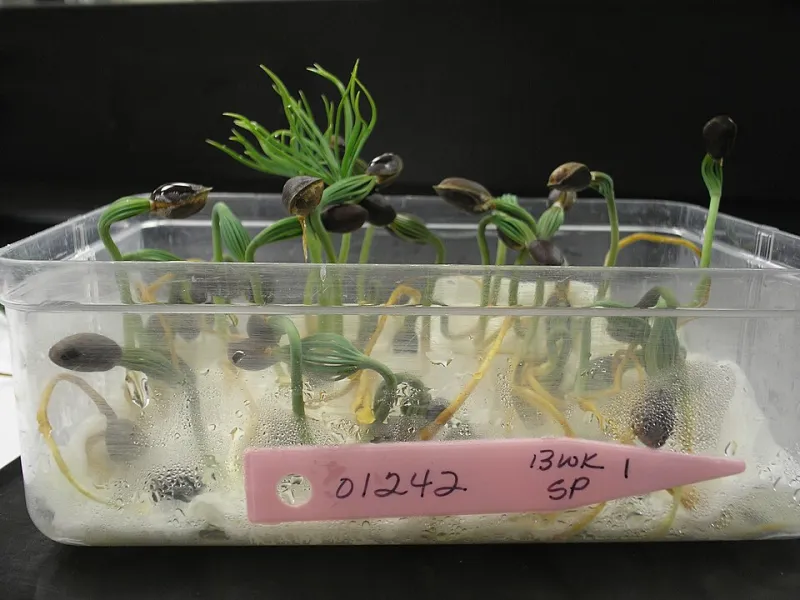
Photo: USFS Region 5, CC BY 2.0, via Wikimedia Commons
November gets a bad press on the plot. The beans are down, the light is going, and the seed tin looks like a job for January. But this is exactly the week to open it. Not to sow — to audit. A germination test on damp kitchen paper is cheap, quick and quietly subversive: it replaces hope with evidence, and it turns a private stash into a shared resource.
Why now, before the catalogues win
By the time the seed catalogues land in December, most of us have already made the same mistake: ordering replacements for packets that were probably fine, or sowing old favourites that will never show. A November test gives you real numbers before the spending starts. It also leaves time for a seed swap or a shared order, rather than a panicked trip to the garden centre in April.
The other reason is quieter. A seed tin is a small archive of previous seasons — impulse buys, inherited packets, saved beans, the tomato that worked in 2024. Testing it is how you find out which parts of that archive are still alive. It is not glamorous, but it is the kind of quiet competence that permaculture is actually made of.
The kit, and the mistake nearly everyone makes
You need very little: kitchen roll or unprinted paper towel, a saucer or small tub, a pencil, tap water and a warm-ish spot. Take ten seeds from each packet. Ten is enough to spot a dud, small enough not to waste good seed, and easy to count when you are tired.
Label everything. This is not optional. Within three days you will have convinced yourself that you will remember which row is the kale. You will not.
The mistake is making the paper too wet. You want damp, not swampy. Fold the paper, wet it, squeeze out the excess, then lay the seeds in a row across the middle. Fold again, slide it into a labelled tub or saucer, and keep it somewhere around 18–22°C. An airing cupboard is fine. A warm windowsill is fine. Light is not needed yet; warmth and moisture are the trigger.
Check daily and keep the paper damp, not dripping. If mould appears, note it and remove the affected seeds. Mould is not a moral failure; it is information about how that packet has been stored.
Reading the numbers like an adult
A seed has germinated when a clean white root — the radicle — emerges. Not when the seed is merely swollen. Not when you are willing it to happen. Count the ones with a visible root, then work out the percentage.
Roughly: 90–100% means use the packet as normal. 70–89% means sow a little thicker than the packet suggests and accept a few gaps. 50–69% means use it for early salad leaves or a low-stakes crop, not your main sowing. Below 50% means do not build your 2027 plan around it. Compost it, or keep it for a wild experiment if you enjoy that sort of thing.
Ten seeds is a guide, not a guarantee. A packet can test at 80% and still throw a wobbly in cold soil. But a packet that tests at 30% on damp paper in a warm kitchen is not going to redeem itself in a windy raised bed. Honest numbers save you from blaming the weather for a problem that started in the seed tin.
The community bit is practical, not sentimental
Here is where the kitchen-table test becomes something bigger. Post your results in the allotment WhatsApp group. Add them to a shared spreadsheet. Write them on the back of the packet and take a photo for the site noticeboard. If three people each test five packets, you have audited fifteen varieties without anyone doing a heroic amount of work.
That shared list changes what you order. You can split a packet of parsnip seed, which rarely keeps well, between four plots. You can agree that one person grows the reliable tomato and another trials the fancy one. You can plan a February seed swap around what actually germinates, rather than what everyone optimistically bought in a January sale.
This is resilience in a small, unglamorous form. A seed list shared is a seed list that survives a bad year, a lost job, a moved plot or a forgotten packet at the back of the shed. It also makes the seed swap less about polite table manners and more about useful exchange.
A few honest caveats
Parsnips and onions are short-lived; test them first. Beans and brassicas are usually tougher. Saved seed from your own plot may germinate more slowly than bought seed, so give it a few extra days before writing it off. And do not test every single packet — sample the doubtful ones, the expensive ones and the ones you are planning to rely on.
Set the saucers on the kitchen table, make a mug of tea, and give it a week. By then you will know what you have, what you need and who you can swap with. The seed tin can sleep later. First, find out what is still dreaming in there.