Seven Layers, One Paving Slab: A Pocket Fruit Guild for the Front Garden
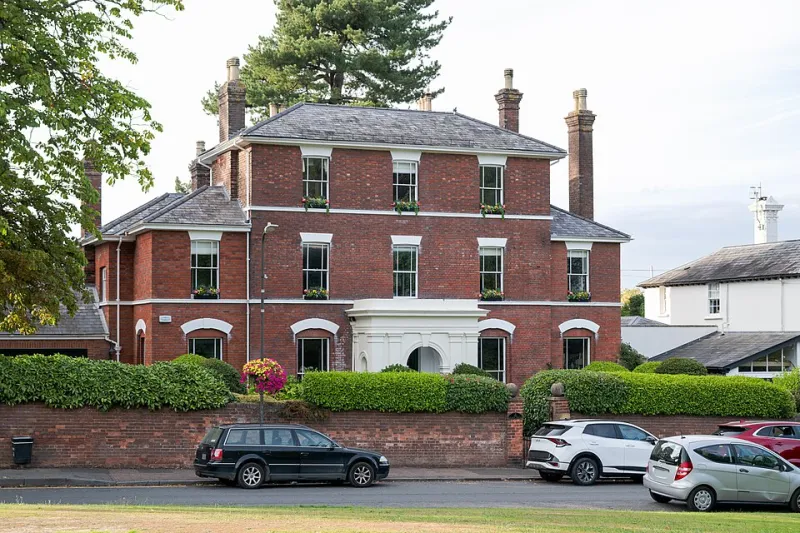
Photo: Tilman2007, CC BY-SA 4.0, via Wikimedia Commons
Front gardens are the most overlooked growing space on the street. They face the pavement, catch the morning sun, and usually contain a bin store, a few tired shrubs and a lot of bare soil. But even the smallest of them can become a productive perennial patch. Not an allotment. Not a mini-orchard in the romantic sense. More like a pocket fruit guild: a tightly packed community of plants that look after each other, fit into a square metre or so of bed, and give you something to nibble on the way out of the door.
This is the permaculture idea of a guild, scaled down to the size of a paving slab. In a larger garden you might spread the layers over several metres. In a front garden, you compress them. The trick is to stop thinking about rows and start thinking about layers — and to be honest about what one square metre can actually support.
Start with the footprint, not the fantasy
A one-metre bed is a footprint, not a force field. A dwarf apple tree’s roots will travel under the path and into next door’s frontage if they want to. That is usually fine, but it means the tree needs decent soil below it and a realistic rootstock. For UK front gardens, look for apple on M27 or M9, pear on Quince C, or a compact plum on Pixy. Columnar apples are an option where width is tighter than height. Choose a self-fertile variety if there is no compatible tree nearby — ‘Discovery’ apple, ‘Victoria’ plum and ‘Conference’ pear are familiar, reliable starting points, though your local nursery will know what suits your area.
If the bed really is only one square metre and surrounded by hard paving, a large container may be kinder than open ground. A 45–60 litre pot with a dwarf tree, a coppiced nitrogen-fixer and a skirt of strawberries can work beautifully by a front door. But pots dry out fast, so mulch heavily and plan for summer watering.
The layers, translated for a tiny plot
In a compact guild, the canopy layer is the dwarf fruit tree. Keep it small by choosing the right rootstock and pruning gently in winter. The shrub layer is where nitrogen-fixers earn their place — but many are thugs in a tiny space. A coppiced Elaeagnus, cut hard every spring, can be kept to a manageable size, or use a large pot of Siberian pea shrub and root-prune it. If that feels like too much fuss, a strong herbaceous nitrogen-fixer such as perennial lupin or a clover understorey does much of the same job without bullying the tree.
The herbaceous layer gives you cut-and-come-again leaves: perennial kale, sorrel, wild rocket, lovage if you have height. The ground cover layer knits the soil together and suppresses weeds: wild strawberry, creeping thyme, sweet violet, white clover. The root layer can be annual — radishes, spring onions, or a few carrots sown between young plants — because perennial roots in a tiny guild often compete too hard. The climber layer belongs on the wall or fence beside the bed, not in the middle: a climbing nasturtium for quick cover, or a hardy kiwi only if you have real space and strong wires. Finally, the pollinator layer is not optional. Borage, calendula, lavender and chives bring in the insects that make the fruit set.
That is seven layers in a space you can cross in one step. It sounds crowded because it is. The skill is in timing and pruning, not in giving every plant a generous berth.
A planting plan for one square metre
Imagine a bed one metre wide and one metre deep, set against a low front wall. Put the dwarf tree towards the back, about 45cm from the wall, so its roots have some soil to explore and its canopy does not block the path. Plant the coppiced nitrogen-fixer to one side, 40cm from the tree, and keep it cut back so it never shadows the fruit. Tuck the herbaceous layer along the front edge: sorrel on one side, perennial kale on the other. Strawberries and clover fill the gaps. Sow calendula and borage at the corners, and let a nasturtium scramble up the wall.
Bare-root season is open now, so this is the moment to order a small tree rather than buy a pot-bound one in spring. Plant it at the same depth it grew in the nursery, firm the soil, water it in, and mulch with well-rotted compost or leafmould, keeping the mulch clear of the trunk. Do not add fertiliser to the planting hole. Let the roots go looking.
The first year is mostly watering and nerve
A new guild looks sparse. Resist the urge to fill every centimetre. In the first summer, water the tree deeply once a week in dry spells, keep the ground covered, and cut back anything that starts to swamp the fruit. Remove flowers from the tree in its first year so it puts energy into roots. The nitrogen-fixer can be trimmed two or three times through the season, and the clippings can go straight onto the soil as mulch.
By the second year, the guild should start to close over. By the third, you will have a tiny ecosystem rather than a collection of plants. The tree will be small. The harvest will be modest. But the point is not to replace a supermarket. The point is to make the front garden do something useful, visible and alive.
From one front garden to a street template
A single pocket guild is a nice thing. Five in a row is a neighbourhood. The real permaculture move is to make the design repeatable: the same simple planting plan, the same short plant list, the same laminated label by the gate explaining what is growing and why. Put a note on it: ‘This is a dwarf fruit guild. Pick a strawberry. Ask before you pick the apples.’
Then share it. Swap cuttings of the clover and strawberries. Give away spare borage seedlings. Offer to help a neighbour dig out a paving slab. Streets with no room for allotments still have front edges, and those edges are public-facing, sun-catching and full of potential. One square metre is not much. But it is enough to start a pattern.