Walk Less, Grow More: The Week That Redraws Your Allotment
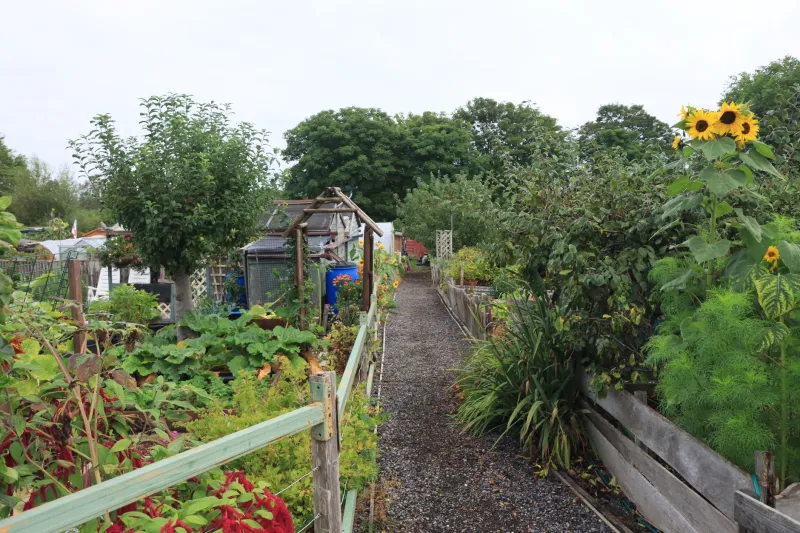
November is the season when a lot of us start redrawing the plot on paper. New beds, new paths, maybe a smarter shed. But most of those plans begin with the wrong question. They ask where things should go, rather than how you actually move between them. On a real UK allotment, the biggest drain on your time is rarely the digging. It is the walking.
This is the thinking behind a step-count audit. It is not a fitness challenge, and it is not about shaming anyone for taking a breather by the shed with a flask. It is a design exercise. For one normal week, you watch the journeys you already make, then use the evidence to arrange zones, paths and tool storage so your daily chores need fewer trips. In permaculture terms, you are designing for movement before you design for beds.
Start with a week of honest data
Pick a week that looks like your usual plot life. If you are only there at weekends, audit the weekends. If you pop down after work, include those short visits too. The aim is not a perfect data set. It is a rough picture of where your feet go.
Your phone probably has a step counter. Use it, but do not rely on the total alone. A big number tells you that you moved; it does not tell you why. So keep a small notebook in your coat pocket and jot down three things: the time you arrived, the main jobs you did, and the journeys that felt repetitive. If you forget the notebook, send yourself a voice note. If you dislike phones on the plot, use a simple tally on a scrap of paper pinned inside the shed door.
At the end of each visit, draw a rough sketch of the site. Mark your gate, shed, tap, compost heap, water butts, greenhouse and the beds you used most. Then add arrows for the trips you remember making. They do not need to be elegant. A wobbly line from the shed to the tap is perfect.
Count the trips that trigger more trips
A step count is useful, but route triggers are more useful. These are the small errands that set off a chain: you go to the shed for gloves, remember the secateurs are in the kitchen, walk back for the trug, then return to the bed you started from. Each one is short. Together they eat a morning.
For one week, tally these four categories:
- Water trips: visits to the tap, water butt or watering can fill point.
- Tool trips: journeys to fetch, swap or put away tools.
- Material trips: compost, mulch, string, fleece, netting, wheelbarrow loads.
- Comfort trips: the kettle, the loo, the gate, the bench, the phone call.
You are not trying to eliminate comfort trips. A plot without a brew stop is not a plot worth designing. You are trying to see which ones are accidental. If you visit the tap six times in an afternoon because the can is tiny, that is a design clue. If you always carry tools from the shed to the far bed by hand, that is another.
Turn the tally into zones
Permaculture zones are usually described as rings of use. Zone 1 is what you touch daily: herbs, salad leaves, the compost caddy, the tool you reach for most. Zone 2 is visited every few days. Zone 3 is more occasional. Zone 4 and 5 are the wilder, less managed edges. On an allotment, these zones are not neat circles. They are a way of asking what deserves to be close to your feet.
Your audit gives you the evidence. If the kettle, the gloves and the harvest basket are all in the shed at the far corner, you have built a plot that demands a pilgrimage before every job. If the compost heap is miles from the kitchen waste you bring in, you will find excuses not to use it. If the water butt is at the wrong end of the greenhouse, you will carry cans further than you need.
Try this simple test. Look at your arrows and ask which three destinations appear most often. Those are your real zone 1. They should be close to the gate, the shed or whichever point you naturally arrive at. Then ask which destinations are visited rarely but take up prime space. Those can move further out.
Make paths do more work
UK plot paths have a hard life. They take wheelbarrows, welly boots, winter rain and the occasional delivery of manure. A narrow path that looks charming in a seed catalogue can become a muddy obstacle course by January. If you are always stepping onto beds to pass someone, or turning a barrow three times to get round a corner, the path is costing you energy.
A good main path is usually wider than you think. Aim for enough room to push a wheelbarrow without clipping the bed edges, and make the surface firm enough to use in wet weather. Woodchip, bark, gravel or well-laid paving can all work, depending on your site and budget. The key is consistency. A broad spine path with short spurs into beds often beats a narrow loop around every single bed. Fewer edges mean fewer places for weeds, less material, and less walking.
Also look at your turning points. Can you get a barrow into the compost bay without reversing? Can you set down a heavy crate without blocking the path? Is there a dry spot to stand while you unlock the shed? These small details are not glamorous, but they are the difference between a plot that flows and one that fights you.
Put storage where the work happens
The shed is not the only storage on a plot. It is just the biggest box. If every tool lives there, every job begins with a walk. A satellite tool station can be as simple as a covered crate under a bench, a hook inside the greenhouse, or a small lockable box near the beds you use most. Keep a trowel, hand fork, twine and a spare pair of gloves close to the action. Put the less-used things further away.
Water is the same story. One large water butt in the wrong place is less useful than two smaller ones near the beds that dry out first. If your site has a shared tap, talk to the committee about a standpipe or a better fill point. That is not a luxury. It is infrastructure that saves everyone a dozen unnecessary journeys.
Test three changes, then repeat in spring
After your audit week, resist the urge to redesign everything at once. Pick three changes that answer your clearest evidence. Move the tool caddy closer to the most-used beds. Widen the main path at its narrowest point. Group the water butts, compost caddy and harvest basket so one trip does more than one job. Then live with those changes for a month.
In spring, repeat the step count for a few days. You are not looking for a perfect number. You are looking for fewer frustrating loops and more time with your hands in the soil. A plot designed for lazy efficiency is not a plot where nothing gets done. It is a plot where the work is arranged sensibly, so you can spend your energy on growing rather than marching.
And there is a community angle here too. Firm, wide paths and well-placed storage make a site easier for older knees, buggies, wheelchairs and children. When you audit your own plot, compare notes with a neighbour. The chances are you are both making the same pointless trips to the same awkward tap. That is how a private tweak becomes a shared improvement — and how a November afternoon with a notebook turns into a better plot for everyone.