Strips, Not Swathes: Sowing Winter Green Manure Without Losing the Plot
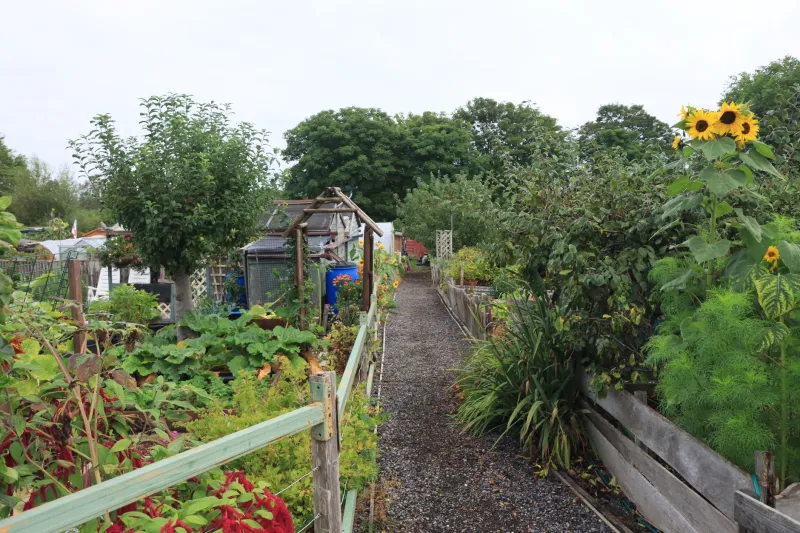
Photo: Sebastian Ballard, CC BY-SA 2.0, via Wikimedia Commons
There is a particular kind of November optimism that involves looking at a bare allotment bed and thinking: right, I'll sow the whole thing with green manure. Then January arrives, the pigeons have held a convention, half the seed has sulked in cold clay, and the other half has formed a dense little lawn that you cannot face chopping. The answer is not to give up on winter cover. It is to sow in strips.
Why bare isn't beautiful
A bare bed is not resting. It is leaching. Rain hits it, nutrients move down and out, and the soil surface pans or caps. On a heavy plot, winter weathering can turn a lovingly improved bed back into something that sets like a biscuit. Green manures help: roots open channels, tops soften raindrop impact, and legumes add nitrogen if their roots nodulate properly. But a green manure is a crop, not a magic carpet. It needs a plan.
That plan gets easier if you stop thinking in whole beds and start thinking in strips. A strip can be a metre wide, the width of a rake head, or a single path-side row. It can be sown now, next month, or in the first week of February. It can be chopped before it becomes a problem. And if one strip fails, you have lost a strip, not your spring planting calendar.
Start with the drain, not the drill
The first question is not "what shall I sow?" It is "where does the water go?" Walk the plot after rain. Mark the soggy corners, the frost pockets, the places where the soil sticks to your boots in a heavy lump. Green manures sown into standing water are an expensive way to feed the local bird population.
On free-draining sandy soil, winter tares and grazing rye will usually get away. On heavy clay, field beans and grazing rye are the safer bets, because they can cope with more moisture and their roots do useful structural work. On a bed that floods, leave it alone, cover it with a thick mulch or cardboard weighted down, and sort out drainage before you sow anything. A seed packet is not a drainage solution.
Also check what is going in next. Mustard and other brassicas are off the menu if the bed is destined for cabbages, kale or broccoli, because they share clubroot and other problems. Field beans are legumes, so avoid them before a pea or bean crop if you are trying to break a disease cycle. Grazing rye is a grass, which makes it a useful break, but it can suppress small spring seedlings if you chop it too late and leave a thick mat.
The strip calendar
From late November, sow small strips rather than whole beds. A dozen short sowings across the dormant months is plenty. Think of them as a calendar written in seed.
- Late November: grazing rye on the heaviest, wettest bed. Broadcast thinly and rake in. It will germinate slowly but steadily.
- Early December: winter field beans in a strip that will become courgettes or squash. Push them in 15cm apart, two rows deep, and net against pigeons if your site is plagued.
- Mid-December: winter tares on a lighter bed that will take hungry leafy crops next year. They scramble, so keep the strip narrow.
- January: a second rye strip on any bed that is still bare but not waterlogged. Sow a little thicker than you think, because cold soil germination is patchy.
- February: a final field bean strip on land that drains well, and a rye strip on anything you plan to plant late.
Do not sow into frozen ground or a puddle. Wait. A strip sown in a workable window in February will beat one drilled into a bog in December every time.
Seed by the sack, not the packet
Green manure seed is cheap in bulk and absurdly expensive in tiny packets. This is where neighbours earn their keep. An allotment association, a horticultural society or a simple WhatsApp group can put together one order and split it by weight. Buy a sack of grazing rye, a sack of field beans, a smaller bag of winter tares, and divide it into paper bags with a scoop and a kitchen scale. Label everything with the crop and the year.
Keep a little back for the person who missed the order, and keep a few seeds in a jar to test germination on a windowsill if you are unsure. Sharing seed is also sharing knowledge: who has the wet corner, who has the free-draining bed, who has a pigeon problem and who has a spare roll of netting. That is a better winter network than another group chat about the hedge.
Keep a winter notebook
You cannot manage what you have not looked at. Once a fortnight, take a photo of each strip from the same spot. Note the date, the crop, the soil condition and the rough percentage of ground cover. A simple 30cm square frame made from canes and string lets you count seedlings in the same patch each time. It sounds fussy; it takes four minutes.
This record does two things. It tells you which green manures actually work on your soil, not on a seed company's website. And it stops the spring panic. If the rye strip has only 30% cover in January, you know to sow something else or mulch. If the tares are romping away, you know to plan the chop early.
The chop is the whole point
A green manure left too long becomes a weed with good PR. Grazing rye should be cut before the stems shoot up and set seed, usually two to three weeks before you want to plant. Winter tares should be cut before flowering. Field beans should be cut before the stems go woody. Use shears, a strimmer or a mower on a dry day, and cut close to the ground.
Then decide what the tops do. On a no-dig bed, a thin layer of chopped tops can be left as mulch, but do not smother small spring seedlings. On a heavy soil, compost the tops or add them to the communal heap, and leave the roots in the ground to decay. Do not dig wet soil just to incorporate a green manure. You will do more damage than the crop did good.
A small, shared experiment
The point of strip sowing is not to be tidy. It is to be adaptable. A dozen small sowings across the winter give you a living record of what your soil will accept, what your neighbours can share, and what your spring beds actually need. It is also a quiet bit of community infrastructure: a seed order, a shared notebook, a chopping day in late February when everyone brings a flask and a pair of shears.
Bare beds are not a moral failure. But a plot that is bare, leached and compacted by March is a missed opportunity. Sow a strip this week. Sow another when the ground is workable. Chop early, record honestly, and let the spring planting meet soil that has been covered, not smothered.