Sharpen, Learn, Repeat: The Winter Pruning Day That Leaves Skills Behind
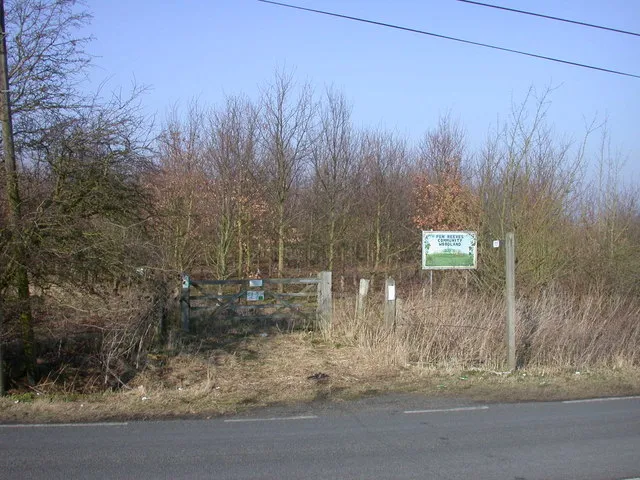
Photo: Keith Edkins, CC BY-SA 2.0, via Wikimedia Commons
There is a particular kind of November Saturday that plays out on community orchards across the country. One person who knows what they're doing stands halfway up a ladder with a pruning saw. Twenty others stand at the bottom, hands in pockets, holding mugs, watching. By three o'clock the trees are tidier, the biscuits are gone, and exactly one person has learned anything — the one who was already holding the saw.
That's not a criticism of the volunteers. It's a design fault. If the point of a shared orchard is that it belongs to everybody, then the pruning day has to be built so the knowledge stays on site rather than walking home in one person's head.
So here's a different shape for the day: not a work-party with a bit of teaching bolted on, but a skills swap that happens to leave you with pruned trees.
The real problem isn't the trees
Apples and pears are forgiving. A neglected cordon or a half-standard will survive a mediocre haircut and still crop. What doesn't survive so well is a volunteer group where every decision funnels through the same two people. That's how projects quietly stall: the saw-holder gets a job in Leeds, or a bad back, and nobody else knows which branch to take out first.
A pruning day run as a swap fixes two things at once. The orchard gets its winter tidy, and the group ends the season with eight or ten people who can confidently make a cut, sharpen a blade and explain why they did what they did. It also tends to change who turns up next year. People come back for the thing they were trusted to do.
Build stations, not an audience
Forget the ladder-and-crowd arrangement. Divide the day into four stations and move people round in pairs, roughly forty-five minutes each:
- Tree reading. No cutting. Just looking: last year's growth, the shape of the framework, where the fruit buds are sitting, which limbs are rubbing. Take a camera and a notebook.
- The cut. Supervised, one tree per pair, with a rule that nobody makes their first cut alone. Start low and stay off ladders if you can — long-handled pruners and pole saws get most jobs done and keep the day accessible to people who'd rather not climb.
- Tool care. Sharpening a bypass pruner, oiling a saw, cleaning sap off blades, storing things so they're usable in March rather than rusted to a block.
- Records. Writing up the trees that were done and, crucially, the reasoning. This is the station people skip and the one that matters most in five years' time.
Swap pairs between stations rather than individuals — it keeps a more experienced grower moving around the site with a less experienced one, and it stops the day turning into a masterclass delivered from height.
A work-party template that fits a Saturday
- 10.00 — tea, introductions, safety walk. Note where the ground is boggy, where there's glass, where the wasps nested in August.
- 10.20 — ten-minute demo: three cuts, done slowly, explained out loud. Dead, diseased, damaged. Then step back and look.
- 10.35 — station one. Pairs read their assigned trees and write nothing down yet.
- 11.20 — station two. First cuts under supervision. Twenty to thirty per cent maximum taken off any one tree; if in doubt, take less.
- 12.15 — lunch. Actual lunch, sitting down, not a sandwich eaten standing over a barrow.
- 13.00 — stations three and four, rotating.
- 14.15 — everyone back round the trees pruned in the morning. One person per pair says out loud what they did and why. This bit feels awkward and is the single most useful half hour of the day.
- 14.45 — tools cleaned, records filed, next date set before people disperse.
The before-and-after checklist for apples and pears
Winter is right for apples and pears — roughly now through to early March, on a dry day when the wood isn't frozen. It is emphatically not the moment for plums, cherries or damsons; leave those to summer, or you'll be inviting silver leaf in through the cuts.
Before you cut:
- Identify the tree. Rootstock, age, variety if known. A vigorous cooker on a big rootstock wants a different hand than a cramped cordon.
- Find the three Ds: dead, diseased, damaged. These come out first and often answer half the questions.
- Look for crossing and rubbing branches, and anything heading straight up through the middle.
- Check water shoots and suckers — the vigorous vertical growth and anything sprouting below the graft.
- Learn the buds. Apples fruit mostly on short spurs and on the tips of last year's shoots; pears fruit on spurs, often on older wood. Stubby, rounded buds are fruit; flat, pointed ones are growth.
- Step back six paces before every cut. Seriously. Every time.
After you've finished:
- The centre is open enough for light and air to move through.
- No stub ends — cut back to a bud or a joining branch, never to thin air.
- No branch left crossing another.
- No more than a quarter to a third of the canopy removed in one winter.
- Cuts clean, not crushed. If a blade chewed the bark, it needed sharpening an hour ago.
- Tools wiped, sharpened, oiled.
- Tree recorded. Which brings us to the important bit.
The log is the whole point
Give every tree a number. A strip of aluminium tag and a marker pen will do. Then one line per tree, every year, in a shared notebook or a spreadsheet someone actually backs up:
Tree 14 — Bramley, west boundary. Removed one low limb rubbing the fence, thinned the centre, took out two watershoots. Left the upper framework alone — it fruited heavily last year. Next winter: reduce the height on the left-hand side. Pruned by Aisha and Tom.
Two minutes of writing. But five years later, when Aisha has moved away and Tom can't remember which side he meant, the reasoning is still on site. That's the difference between a work-party and a body of knowledge. It also lets you spot patterns — the same corner of the orchard getting cut hard every year, the tree that never quite recovers — which is far more useful than a general feeling that things look tidy.
Leave room for the next teacher
One last thing worth designing in: at the end of the day, ask who wants to lead a station next winter. Not who's most experienced — who wants to learn it well enough to teach it. Give them the notebook, the sharpening stone and a date. That's how a group stops depending on its most knowledgeable member and starts growing more of them.
Book the next date before the kettle goes cold. Then put the ladder away, and count the people who now know what to do with it.