Cold Feet, Firm Cloves: Planting Garlic by the Soil's Own Clock
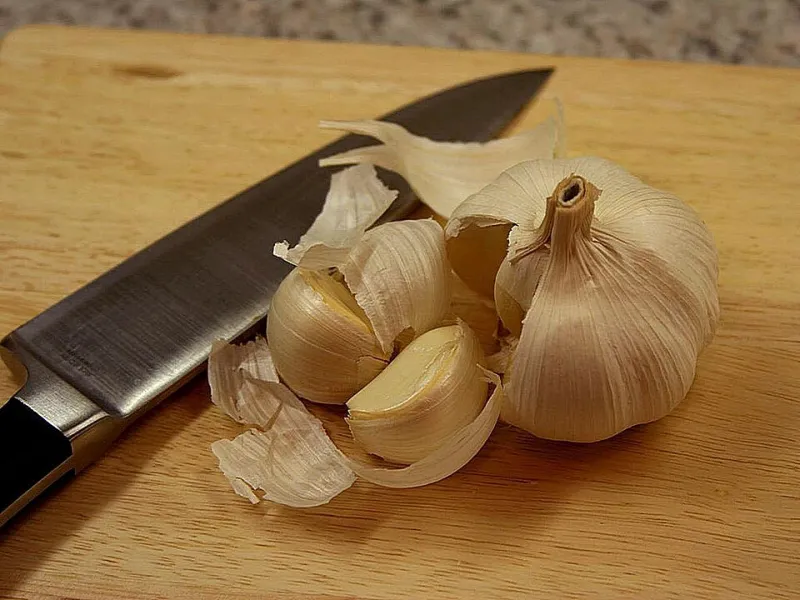
Photo: Jon Sullivan, Public domain, via Wikimedia Commons
As I write this on 14 November 2026, the garlic debate is already running down our street WhatsApp group. Half of us planted a fortnight ago because that is what we always do. The other half are staring at a soggy bed, wondering whether the cloves will sulk, rot, or simply sit there until spring. The calendar says go. The soil, frankly, has not been consulted.
This is the case for a small shift in habit: before you push another clove into the ground, push a thermometer in instead. Ten centimetres down is where garlic makes its first decisions. Get that number right and the calendar becomes a prompt rather than a command.
Why ten centimetres, and not the surface?
The top centimetre of soil is a drama queen. Sun warms it, frost crisps it, rain chills it, and by teatime it has changed its mind twice. Ten centimetres down is calmer. It is roughly where the base of a garlic clove sits, and it is where the roots begin to explore. A reading at that depth tells you what the clove is actually experiencing, not what your boot soles are feeling.
Garlic wants to root before hard frost, but it does not want a warm, wet welcome. Roots move at around 5–10°C. Push cloves into soil that is still 12°C or more and soaking wet, and you are inviting basal rot before Christmas. Push them into soil that is already frozen solid, and nothing happens except regret. The sweet spot is soil that is cooling into single figures and still workable. In most UK Novembers, that is a moving target rather than a fixed date.
Take the reading like you mean it
You do not need a laboratory. A decent probe thermometer with a 10cm mark, or a kitchen probe and a ruler, will do. Take it out at around nine or ten in the morning, before the sun has had a chance to flatter a dark bed. Push it in to 10cm, leave it for a minute, and read it. Do that in three places: the raised bed, the open ground, and the corner that always holds water. Average them, but write all three down. The wet corner is often two degrees cooler and far more important than the average suggests.
If the average is 8–10°C and falling, plant. If it is 12°C and the bed is squelchy, wait a week and ridge the soil up in the meantime. If it has dropped below 5°C, the roots will be slow, but a mild spell and a mulch will often rescue things. What you are trying to avoid is the double whammy: warm soil plus stagnant water. That is how cloves turn to mush.
Choose cloves for your plot, not the picture on the packet
Wet plots and exposed plots are different problems, and they want different garlic. On heavy clay or a bed that puddles, lean towards reliable softnecks such as 'Solent Wight', 'Cristo' or 'Germidour'. They tend to cope with damp better than the big, bolting hardnecks, and they store well. Plant them on a slight ridge, mix in grit and compost, and keep the cloves shallow — about 2–3cm deep in heavy soil, with the pointed end up and the papery skin left on.
On a windswept allotment or a cold northern site, earlier hardnecks can be brilliant, but they need drainage and a little shelter. 'Chesnok Red' and 'Music' are worth trying if your soil is freer. Avoid planting deep in wet ground just because you are worried about frost. Deep cloves in cold clay are a rot risk. Better to plant at the right depth and mulch after the soil has properly cooled.
Buy certified UK-grown stock where you can. Supermarket garlic is often treated or chosen for shelves, not soil, and it can carry disease. A seed swap is better, but only if the cloves are healthy and labelled.
The shared probe and the bulk buy
Here is the bit that makes this a street project rather than a solo obsession. Six households on our road went in together on a pack of cheap 10cm probe thermometers last autumn. Each person paid a few pounds, one person ordered, and we split a bulk garlic order at the same time to save on postage. It was not a grand scheme. It was a spreadsheet and a WhatsApp group.
It worked because we compared notes. Each row had a plot name, variety, planting date, soil temperature at 10cm, emergence date, and a notes column for things like 'bed flooded' or 'birds pulled three cloves'. By February we could see that the sheltered south-facing plots had emerged a fortnight earlier, and that the wettest bed did better on ridges with a grit mulch. That is real local knowledge, and it cost less than a round of coffees.
If you want to copy it, keep it simple. One person coordinates the order, everyone labels their own cloves, and you agree to take a reading on the same morning each week. Meet once in spring to compare notes and swap spare plants. The thermometer is the excuse; the conversation is the point.
A planting-day checklist
- Take the 10cm reading for three days running, not just once.
- Fork over compacted ground, but do not dig wet clay into a sticky mess.
- Ridge or mound heavy beds, and add grit and compost to the planting line.
- Break cloves from the bulb on planting day, keeping the skins on.
- Space cloves 10–15cm apart, base down, point up, 2–3cm deep in heavy soil and up to 5cm in light soil.
- Mulch after the soil has cooled, not while it is still warm and wet.
- Label the variety and the date. Future you will be grateful.
When to ignore the rule
Sometimes the soil says no. If the bed is waterlogged and the forecast is mild and wet, do not force it. Pot cloves into modules in a cold frame and plant them out in late winter, or accept a spring planting with a smaller crop. If a hard frost is coming and the ground is workable but cold, plant now and mulch afterwards. The ten-centimetre rule is not a law; it is a conversation with your plot.
The calendar got us into garlic. The thermometer can get us better at it. And if the neighbours bring their readings too, we all learn a little faster.