The Milk-Jug Greenhouse: A No-Budget Way to Sow Through Winter
Winter sowing is one of those ideas that sounds too good to be true: sow seed outdoors in winter, in a milk jug, and get sturdy seedlings earlier in spring. In the UK's damp, mild winters it works, but not by magic. It works because you are making a small, ventilated shelter that protects seed from wind, rain and hard frost while still giving it the cold and light it needs.
Why a milk jug works
A translucent plastic milk jug is a miniature greenhouse with terrible build quality and excellent recycling credentials. Cut it open, add drainage holes, fill it with compost, sow your seed and tape it back together. The plastic lets light in, keeps the worst of the weather off and traps a little warmth during the day. The open cap stops it turning into a sauna.
It is not a heated propagator. It will not give you tomatoes in May from a January sowing. What it does do is let hardy plants get on with the natural cycle of cold, wet and slowly warming soil. Seedlings grown this way tend to be stockier than windowsill seedlings, because they have light from the start and no sudden move to the big bad outdoors.
What to sow now, and what to wait for
In early November 2026, the soil is cooling and the days are short. This is not the moment to sow tender crops. It is the moment for hardy perennials, native wildflowers and a few tough herbs that benefit from a cold spell.
Good candidates for a November milk jug include foxglove, yarrow, echinacea, lupin and other hardy perennials that need cold stratification. Hardy herbs such as parsley, coriander, dill and chives can work, though germination may be slow. Broad beans and hardy peas are worth a try in mild areas, but keep expectations modest: a wet, mild winter can rot seed as easily as a cold one.
Hold fire on kale, cabbage, chard and spinach until late winter or early spring. They are hardy, but they do not need a November start in most of the UK. And absolutely wait on tomatoes, chillies, courgettes and basil. A milk jug is a shelter, not a miracle.
Step by step
- Collect translucent plastic milk jugs. Clear or semi-clear is best. Rinse them well.
- Cut around the middle, leaving a hinge at the handle so the top stays attached like a clamshell.
- Punch drainage holes in the bottom. More than you think. UK winters are wet.
- Fill the bottom half with peat-free multipurpose compost, leaving a couple of centimetres below the rim.
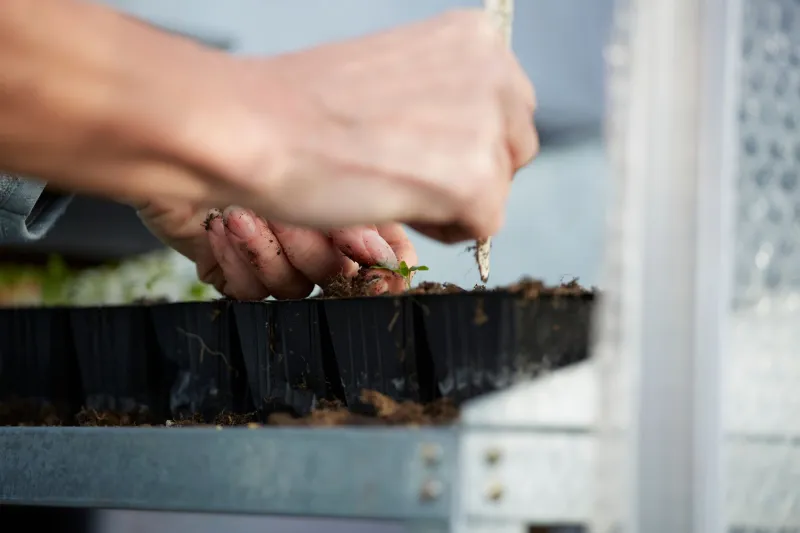
- Sow your seed at the depth on the packet. Water gently and let it drain.
- Tape the jug closed around the cut line. Leave the cap off for ventilation.
- Label the jug with a permanent marker: variety, date and anything useful. Pencil fades; hopes fade faster.
- Place the jug outdoors in a sheltered spot with light. Against a wall, on a bench or in a cold frame is ideal. Not in a dark shed.
- Check weekly. Water only if the compost is dry. In a wet UK winter, that may be never.
- Open the jug on mild days once seedlings appear, and transplant when they have true leaves and the weather allows.
Troubleshooting the damp, mild UK winter
Mould on the surface. Scrape it off, increase ventilation and stop watering. A little surface mould is not a disaster; a soggy, sealed jug is.
Green algae on the plastic. Annoying but usually harmless. It means light and moisture are getting in, which is the point. Wipe it off if it gets thick.
Slugs and snails. They will find the jug. Raise it onto a bench or add a copper tape barrier. Check under the rim after rain.
Mice. They like a dry seed stash. A piece of mesh over the top, or storing jugs on a shelf, helps.
Leggy seedlings. Move the jug to a brighter spot. If they are really stretched, sow again later; winter sowing is cheap enough to forgive a failure.
Frozen solid compost. Do not panic. Hardy seed is built for cold. Let it thaw naturally and avoid prodding frozen seedlings.
Nothing germinating. Some perennials need eight to twelve weeks of cold before they wake up. Check the packet, be patient and do not tip it out in January.
The permaculture bit
Winter sowing fits the permaculture toolkit neatly. It uses waste as a resource: milk jugs that would otherwise go to recycling become plant nurseries. It works with natural cycles rather than fighting them, using winter cold as a trigger rather than a problem. It is a small and slow solution, which is often the most resilient kind. And it stacks functions: the jug is a propagator, a slug barrier, a label holder and a tiny lesson in patience.
You do not need a greenhouse, a heated bench or a budget. You need a few jugs, some compost and the willingness to let the weather do part of the work. In a UK winter, that is a fair bargain.